


Rastrom · Operational history
Industrial traceability from material origin to operational history
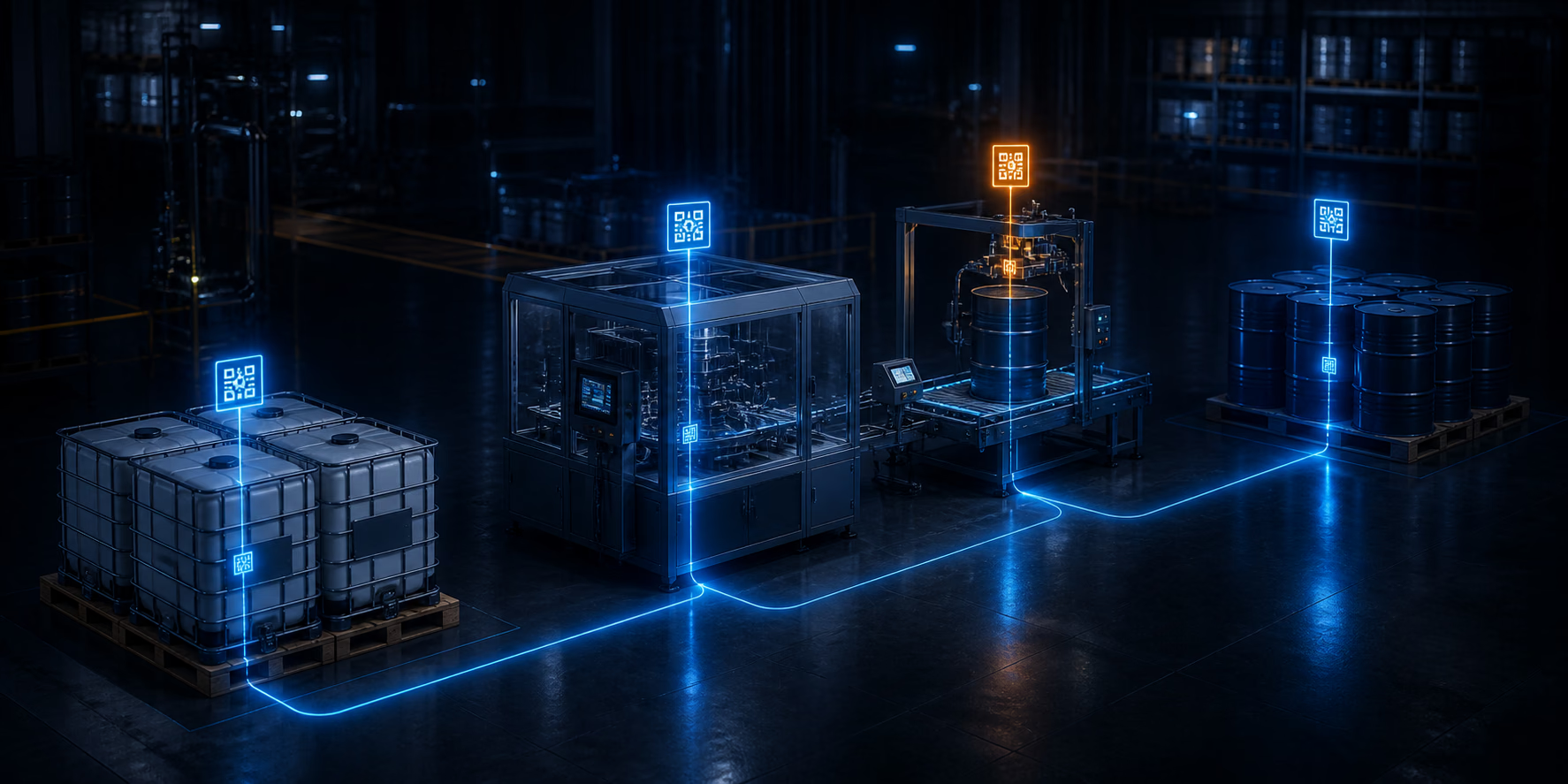
Connect receiving, inventory, production, equipment and dispatches to reconstruct the journey of materials and batches.
What does Rastrom provide with this solution?
Industrial traceability is the ability to reconstruct an item's or batch's origin, stages and destination. Arlis links material receipts, inventory, production orders, batches, equipment, calibrations and dispatches.
What is industrial traceability?
Industrial traceability organizes evidence about materials and products throughout a process, from receiving to final dispatch.
Arlis keeps these relationships in one workflow per site, making searches easier and reducing information scattered across isolated controls.
Organized information that reduces uncertainty
Connect technical data to the context used by your team.
Searchable origin
Link documents and receipt identifiers to incoming materials.
Inventory sequence
Organize material position and chronological FIFO consumption.
Connected batches
Relate orders, batches and materials to preserve production history.
Unified records
Access equipment, calibration, dispatch and operation records together.
What can be part of your operation
Configuration follows the module and operational context contracted for each site.
- Documented material receiving
- Chronological inventory control
- Bag and material identification
- Production orders and batches
- Material-to-batch links
- Calibration and dispatch records
How information moves through the operation
- 01
Receive
Record incoming materials, documents and identifiers.
- 02
Store
Organize inventory position and chronological consumption.
- 03
Produce
Create orders and batches with the corresponding materials and parameters.
- 04
Trace
Retrieve the origin and history of every recorded batch and dispatch.
Answers about Industrial traceability
Objective information to evaluate this solution for your operation.
What does industrial traceability record?
It can record material origin, receipts, inventory, consumption, orders, batches, equipment, calibrations and dispatches.
Why are batch identifiers important?
They connect materials, stages and production records so history can be reconstructed.
Does Arlis support FIFO?
Yes. Inventory is organized chronologically to prioritize the oldest received materials.
See Rastrom applied to your operation
Tell us about your scenario and discover the most suitable configuration.